The difference between a natural and an organic mattress is certification. A natural mattress is made of materials of natural origin, such as natural latex, wool, cotton or eucalyptus fiber. An organic mattress uses the same types of materials, but certified organic under official standards such as GOTS or GOLS. Both can be healthy, durable and comfortable, as long as their composition is transparent.
What is a natural mattress?
A natural mattress is made mostly, or entirely, of materials of natural rather than synthetic origin. Common examples:
- natural latex (such as Dunlop latex);
- natural wool;
- plant fibers (eucalyptus, cotton, coir);
- untreated cotton.
A natural mattress isn’t necessarily certified organic, but it is made from natural materials.
What is an organic mattress?
An organic mattress goes further. It is:
- made of natural materials;
- certified organic under strict standards (GOTS, GOLS, etc.);
- controlled across the entire production chain: growing, processing, manufacturing.
To be called organic, a mattress must meet internationally recognized certifications. So the difference isn’t sleep quality, but certification and the cost that comes with it.
Why aren’t all natural mattresses certified organic?
Organic certification means frequent audits, high costs, complex logistics and a fully certified supply chain.
At Futon d’or, we make a deliberate choice: high-quality, durable, accessible natural materials, even when they aren’t certified organic. Latex is the best example.
The case of latex: natural doesn’t mean organic
Natural latex comes from the sap of the rubber tree (Hevea brasiliensis). It isn’t synthetic, and it is known for being durable, elastic and breathable. Organic latex is natural latex that is certified organic, with full traceability and official audits.
The Dunlop latex we use is natural and not partly synthetic, but it isn’t certified organic. This lets us offer excellent value without compromising durability.
A concrete example: the Comfort natural mattress
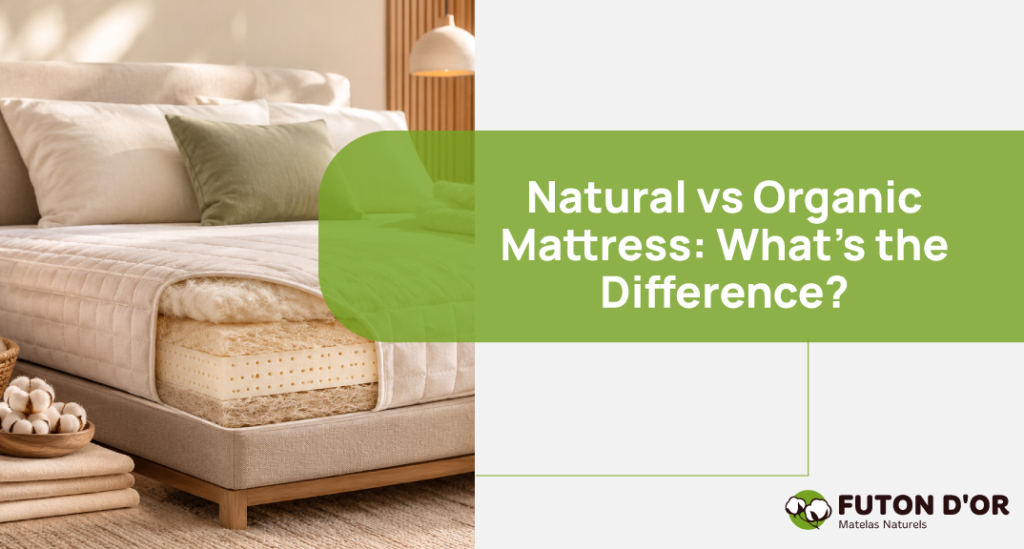
Our Comfort natural mattress is a good illustration of a quality natural mattress. It contains:
- a firm natural Dunlop latex core;
- a layer of eucalyptus fiber;
- natural wool.
For the sleeper, that means firm support with latex’s natural give to ease pressure points, and a fresh, hypoallergenic, dust-mite-resistant mattress with no added flame retardants. Its symmetrical construction also means it can be flipped to extend its life.
Natural or organic: which should you choose?
| Choose a natural mattress if… |
Choose an organic mattress if… |
| you want healthy, breathable materials |
organic certification is an absolute priority |
| you want to avoid synthetic foams and chemical flame retardants |
you accept a higher cost |
| you value local craftsmanship and durability |
you want certified traceability across the whole chain |
| you’re looking for excellent value |
|
Both options can offer healthy, restful sleep, as long as the composition is transparent.
The Futon d’or approach: transparency first
Since 1981, Futon d’or and Atelier de matelas Boréal have stood for a clear vision: no greenwashing, no false promises, no vague marketing. Our natural mattresses are made by hand in Montreal, with clearly identified materials, inspected one by one and built to last.
FAQ
What is the difference between a natural and an organic mattress?
A natural mattress is made of natural materials (natural latex, wool, plant fibers) without mandatory organic certification. An organic mattress uses natural materials certified organic under standards such as GOTS or GOLS.
Is an organic mattress better than a natural one?
Not necessarily. Sleep quality depends mostly on composition, support and breathability. A good natural mattress can offer comparable comfort and durability, often at a more accessible price.
Is natural latex the same as organic latex?
No. Organic latex is natural latex that is certified organic. The Dunlop latex in our mattresses is natural, but not certified organic.
Why does Futon d’or use natural latex that isn’t certified organic?
To balance quality, durability and price: natural Dunlop latex is long-lasting, firm and elastic, and costs less than certified organic latex.
Do natural mattresses contain chemical flame retardants?
Not ours: at Futon d’or, wool, which is naturally flame-resistant, is added at the surface of our mattresses to meet Canadian flammability requirements.
Where are Futon d’or natural mattresses made?
By hand, in our Montreal workshop, by Atelier de matelas Boréal, since 1981.
Does Futon d’or have an environmental commitment?
Yes: $10 is donated to the Nature Conservancy of Canada for every mattress sold.
Browse our natural mattresses, or read Why Natural Latex Is Used in Mattresses.