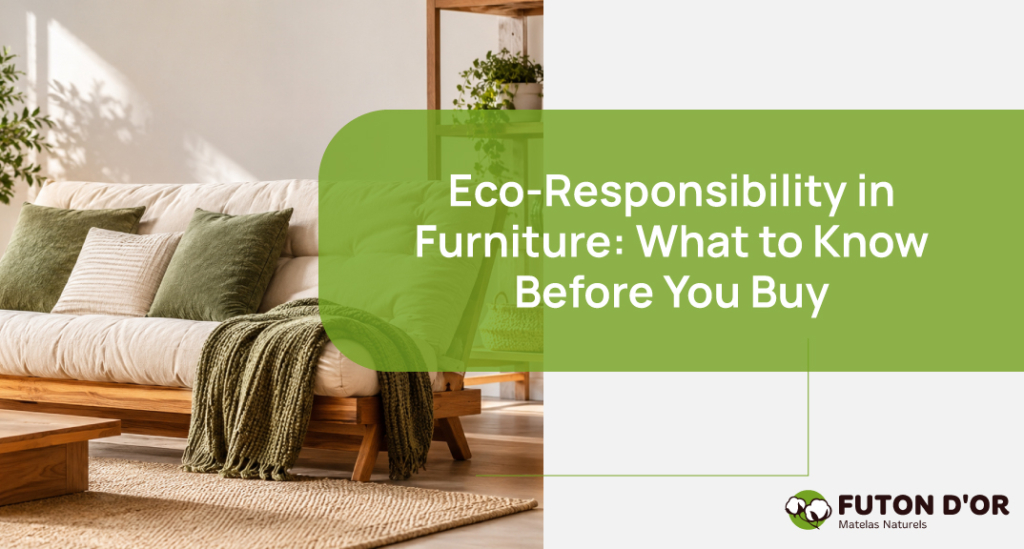
Eco-responsible furniture is judged on four criteria: durable, renewable materials; non-toxic finishes and components; local manufacturing that cuts transport; and durability that avoids frequent replacement. “Natural” and “organic” don’t mean the same thing: a product can be an excellent eco-responsible choice without being certified organic.
Eco-responsibility has become a priority for many shoppers. In furniture, it shows up in material choices, production methods and product durability. But it helps to know what it really means.
1. Understanding eco-responsibility in furniture
- Durable, renewable materials: wood from sustainably managed forests is a common example.
- Non-toxic finishes and components: some brands use natural stains or oils to avoid harmful chemicals.
- Local manufacturing: buying furniture made close to home reduces the carbon footprint of transport.
2. The difference between “natural” and “organic”
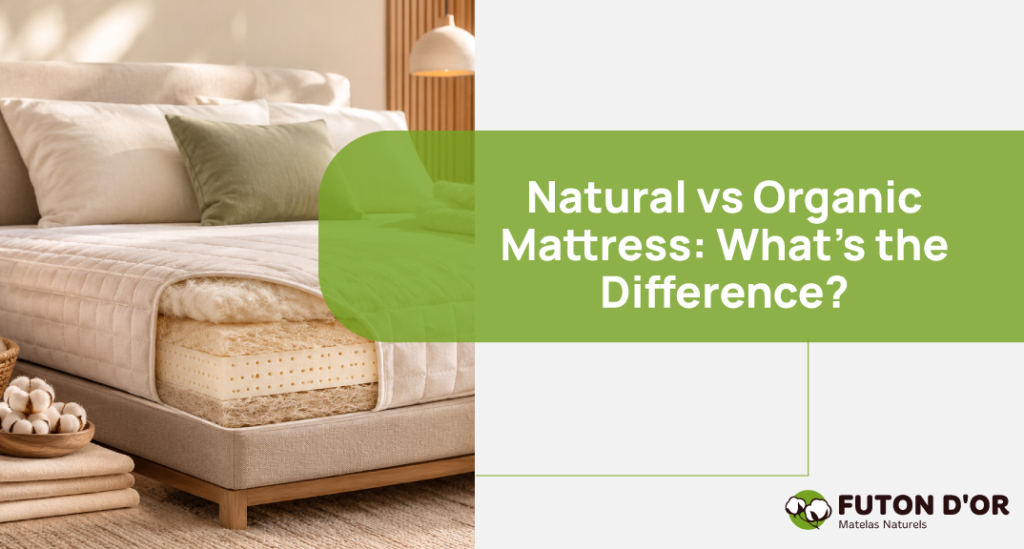
Natural means materials such as solid wood, natural latex or wool are minimally processed and contain no major synthetic components. Organic means materials are certified organic at every stage under official standards. This applies mostly to textiles and some mattress components. To learn more, read Natural vs Organic Mattress: What’s the Difference?
3. Why it matters
- A lower carbon footprint: durable materials, local production and shorter transport reduce emissions.
- Health and well-being: natural products limit exposure to some substances, such as volatile organic compounds (VOCs) in some industrial paints or varnishes.
- Greater durability: a product that lasts is replaced less often, which reduces waste.
4. What to check before buying
- Labels and certifications: for example FSC for wood, GOTS or GOLS for textiles and latex, CertiPUR-US for foams.
- Origin of materials: local or imported, renewable or not.
- Manufacturing methods: favour brands that reduce waste.
- Repairability: a product that can be repaired lasts longer.
- Brand transparency: a serious company explains clearly what it does.
5. The Futon d’or approach
Our mattresses and futons are not certified organic, and we say so clearly. They are made by hand in Montreal with natural materials such as natural latex, wool and cotton. Wool, which is naturally flame-resistant, is added at the surface of our mattresses to meet Canadian flammability requirements, with no chemical flame retardants. Some futons and mattresses can be repaired or re-stuffed rather than replaced. And for every mattress sold, $10 is donated to the Nature Conservancy of Canada.
Conclusion
Eco-responsibility in furniture isn’t just about buying organic. It’s first about choosing natural materials, environmentally respectful processes and durable products. Before you buy, take the time to look at a brand’s practices.
FAQ
Is natural furniture always organic?
No. Natural means made of minimally processed materials; organic means certified organic under official standards.
Which certifications should I look for?
FSC for wood, GOTS or GOLS for textiles and latex, CertiPUR-US for foams.
Are Futon d’or mattresses certified organic?
No. They are made of natural materials, by hand, in Montreal, with no chemical flame retardants.