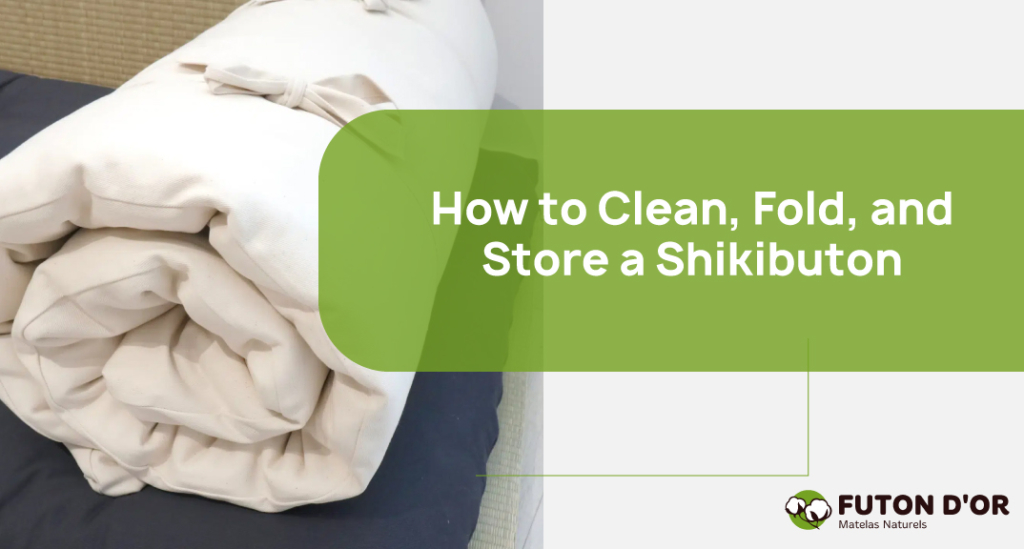
The shikibuton—also known as a Japanese futon—is a minimalist mattress designed for comfort, breathability, and flexibility. Unlike bulky Western mattresses, it can be laid directly on tatamis, folded away during the day, and maintained with simple care habits that preserve its lifespan. If you’ve invested in a quality shikibuton, knowing how to clean, fold, and store it is essential to keeping it fresh and supportive for years.
Cleaning a Shikibuton
- Use a protective cover
One of the easiest ways to keep your shikibuton clean is to use a removable, washable cover. It protects the mattress from stains, sweat, and dust while allowing you to wash the outer layer regularly, just like bed sheets.
- Vacuum occasionally
Shikibutons can be refreshed with a light vacuuming. Using a handheld or low-suction vacuum removes dust, allergens, and particles that accumulate over time. This is especially useful for allergy-prone sleepers.
- Roll, shake, and fluff
Because shikibutons are filled with layers of natural fibers like cotton or eucalyptus, their volume can compress with daily use. Rolling, shaking, and gently fluffing the mattress helps redistribute the fibers and restore its loft.
- Air and sun exposure
Whenever possible, air your shikibuton outside in the sun. Fresh air eliminates odors while UV rays naturally kill bacteria and dust mites. Even short exposures make a noticeable difference in freshness.
- Rotate regularly
Rotating the mattress prevents uneven wear and minimizes humidity accumulation in specific spots. Make it a habit to flip or rotate your shikibuton every few weeks.
Folding and Storing a Shikibuton
- Folding after use
Traditionally, shikibutons are folded into thirds when not in use. This compact shape makes it easy to store in a closet or against a wall during the day, freeing up living space.
- Store on tatamis, not slats
Unlike Western futons or bed frames, shikibutons are not meant to rest on slatted frames—you would feel the slats through the thin mattress. Instead, place it on tatami mats or a flat, breathable surface. Tatamis also help keep the shikibuton off the ground, reducing the risk of humidity and mold.
- Avoid damp areas
Moisture is the main enemy of natural fiber mattresses. Always store your shikibuton in a dry, ventilated area. If your climate is humid, consider using a dehumidifier in the room where it’s stored.
- Give it room to breathe
Do not compress your shikibuton too tightly during storage. Allow air circulation around the mattress so that the fibers remain springy and mold-free.
Why Proper Care Matters
A well-maintained shikibuton doesn’t just last longer—it also provides a healthier and more comfortable sleep environment. For example, Futon d’Or’s Eucalyptus Shikibuton combines cotton and eucalyptus fibers to create a fresh, hypoallergenic, and dust-mite-resistant surface. With proper care, its natural properties remain effective for years.
Key Takeaways
- Clean with a cover, occasional vacuuming, rolling, shaking, and sunning.
- Fold into thirds for easy storage and space-saving use.
- Store on tatamis, away from moisture, and allow for air circulation.
- Rotate regularly to maintain freshness and prevent humidity buildup.
By following these simple steps, you’ll keep your shikibuton fresh, supportive, and comfortable—just as the Japanese tradition intended.
Explore Futon d’or’s collection of handmade Japanese futons and discover the perfect balance of comfort, tradition, and durability.